
Agentic Automation
Agents With Tools|Controlled Workflows|Auditable Actions
Sphere 10 builds agents that carry out useful work across your applications, documents and business systems. We combine model reasoning with explicit workflows, typed tools and application controls. The scope can range from a supervised research assistant to a multi-step operational process with approvals and recoverable execution.
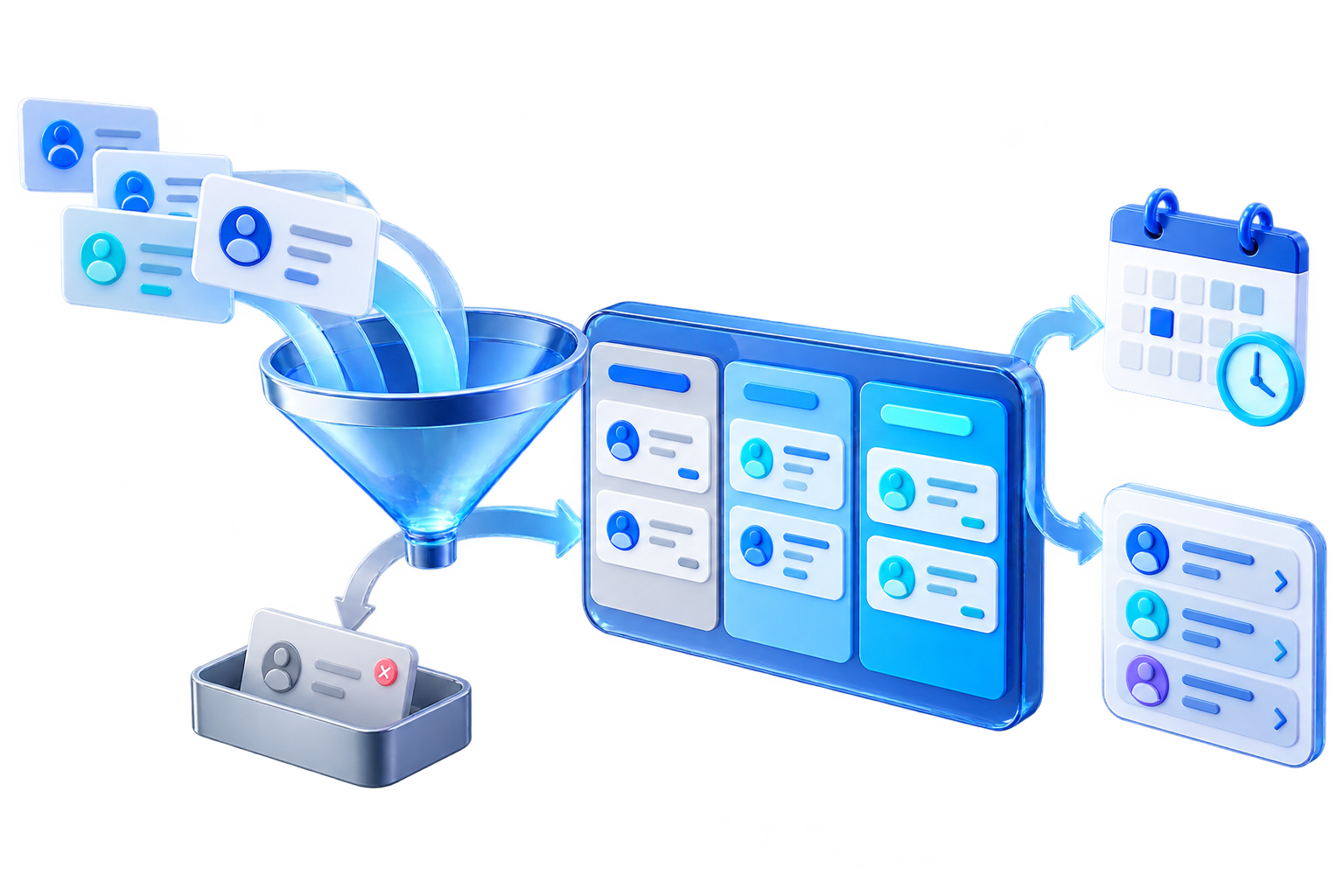
A web form, website conversation, email or SMS can start the same lead-intake workflow. We collect the service or product requested, location, timing and qualification details, ask for missing information where appropriate and match the existing contact. The result is a useful CRM record and the next task for the right staff member, with the enquiry source retained.
Define What the Agent Can Actually Do
We map the task into observation, planning, tool execution and confirmation. Deterministic steps remain ordinary code; model judgement is used where it adds value. Each tool has an input contract, an identity, a permission boundary and a defined result. Reading a record, proposing an update and committing an update are separate operations when the business requires review.
Microsoft Agent Framework provides a current .NET route for agent and workflow composition. We also work with existing Semantic Kernel applications and Python agent components where the ecosystem requires them. MCP can expose tools across compatible systems, but connecting a server does not establish who may invoke a privileged operation. Authorization remains part of the application design.
Lead Intake, Inbox and Follow-Up
Follow-up follows the enquiry stage. A requested brochure, appointment link or reminder is sent from the agreed business account; replies update the same conversation. A response, decline or booking changes or stops the sequence. Existing customers can enter a separate post-order, appointment or delivery sequence, with staff able to inspect sent messages, pause the process and take over.
HubSpot, Microsoft Dynamics or a custom CRM can remain the working record. Supported interfaces update the agreed contact, opportunity, task and activity fields, with duplicate matching, record ownership and validation defined first. Updates retain the activity history and notify the responsible staff member. A .NET integration service owns the durable job ledger; LangGraph or other specialist Python components can participate behind explicit contracts where appropriate. Sales staff retain qualification policy, offers, pricing and commitments.
For support inboxes, the workflow classifies messages, collects authorised records and prepares a reply in the team’s voice. Previous correspondence, attachments and customer identity remain attached to the enquiry. Replies can enter a staff review queue or a narrowly approved automatic class. Post-service feedback, review requests and complaints follow your agreed process and create follow-up tasks with the source conversation; an unhappy response reaches a person who can resolve it.
Build Recoverable Automation
Bookings, Visits and Course Enrolments
A booking must represent capacity the business can fulfil. The workflow explains the service, gathers intake information and checks staff calendars, resource capacity, service duration, travel time and cut-offs. The scheduling system creates the confirmed appointment; the scope defines when a customer may confirm and when staff approval is required.

Clinics, consultants and appointment businesses can connect approved intake questions, confirmations, reminders and rescheduling. Field-service teams can capture site details before allocating a visit. Clinical decisions remain with qualified staff. Microsoft 365, Microsoft Graph, Google Calendar or an existing booking platform are assessed against the actual resource and permission model.
Course workflows handle individual or group enrolments, match participants to the requested course and pass structured records to the agreed learning or student-management system. Capacity, prerequisites and payment state come from their authoritative records. Staff approve exceptions before treating an enrolment as accepted.
Joining instructions, venue details, required documents and student email reminders follow the accepted enrolment. Course changes, cancellations and incomplete registrations update or stop the sequence. C# services preserve appointment identifiers, time zones and change state, so a retried request does not create a second appointment. The operating queue exposes conflicts, missing details and requests outside normal rules.
Use .NET for the Business Boundary
Sphere10 Framework supplies application composition, logging, serialization and communication mechanisms for the surrounding services. We use these established patterns to connect agents to business operations through tested code. The agent receives a constrained capability; it does not receive unrestricted database access merely because it can generate a query.
For multi-agent work, responsibilities and shared state are defined explicitly. We test whether the extra coordination improves the result before adopting it. A single agent with a clear workflow is often easier to operate than several agents repeatedly revising each other's output.
Quotes, Agreements and Signed Records
Approved extraction results and customer records can populate a quotation with selected specifications, images, scope, options and terms in a consistent PDF or editable document. Construction quotes, equipment hire, service proposals and onboarding use controlled templates; calculations and commercial terms remain explicit application logic. Your team supplies and approves its commercial or legal wording.
An accepted quote can become a job or draft invoice through an agreed state transition, retaining earlier versions and the approval authorising the change. Accounting connections supply payment status, statement data and an approved reminder schedule. The model does not invent a balance or authorise a payment.
Where signing is included, an approved provider such as Docusign prepares envelopes, returns signature status and files the resulting agreement against the correct customer or job. Incomplete signatures, declines and reminders have defined actions. The provider response is recorded before advancing the process, with Sphere10 Framework data-access and transaction mechanisms supporting the .NET working record where appropriate.
Orders, Dispatch and Scheduled Pickup
Order events can become a preparation, dispatch or collection queue with required details checked, pickup location matched and work grouped by date. Food retail, wholesale and multi-site collection need an accurate view of what must be prepared, where and when. Equipment or specialist retail can include reservation, hire and document steps. The workflow follows the order and inventory system’s actual state transitions.
Duplicate events and incomplete orders are identified before they create repeated jobs. Staff see the exception, its record context and what has already completed. Accepted changes to stock, pickup details or partial fulfilment update the existing job rather than creating an unexplained second path. Notifications and handover follow the same recorded state.
Accept the Workflow, Including Interruptions
Acceptance scenarios include denied access, invalid arguments, tool timeouts, duplicate events, misleading document content and an interrupted run resumed later. We agree which outcomes require a human and which can be retried automatically. Handover includes tool contracts, workflow definitions, evaluation cases and runbooks for pausing, inspecting and recovering work. Your operations team can then manage an automation service rather than supervise an unexplained conversation log.
We define the first complete path during paid Project Design: a real enquiry to its CRM task, a request to a confirmed booking, a document to its approved record or an order to completed fulfilment. Fixed-price delivery names the channels, systems, document variants, templates, events and exceptions included. Additional channels, deeper CRM changes or new workflow branches are separately agreed.
Platforms & Tooling
.NET Microsoft Agent Framework Microsoft.Extensions.AI Semantic Kernel MCP Python OpenAI Claude
Discuss Your AI Project Back to AI Services