
AI Product Integration
AI Inside Your Product|Typed Application Services|Useful User Experiences
Sphere 10 integrates AI into the software people already use. We build document assistants, guided analysis, classification, drafting and task-specific copilots inside web, desktop and backend applications. The feature shares the product's identity, data boundaries and operational controls instead of becoming a disconnected chat window.
We build website, product and service assistants that understand an enquiry, find the relevant approved information and take the next permitted step. The assistant can explain a service or policy, help choose a suitable product or collect the details of a support request. When a person takes over, the conversation, answer already given and relevant references travel with the handover.

Design the User Interaction Around the Work
We establish the input, expected output and the next action the user needs to take. That may mean selecting source records, reviewing a proposed change, comparing evidence or accepting a structured result. Streaming output, cancellation, progress and error recovery are designed as part of the feature. A failed model call should leave the rest of the application usable.
Our Sphere10 Framework includes ASP.NET Core integration and a Blazor application workspace with typed CRUD, validation, dialogs and retained screens. These are practical building blocks for an AI feature that must work alongside ordinary business forms and records. We select the product interface independently from the model provider.
Customer, Product and Staff Assistants
Routine questions can use approved FAQs, service descriptions, opening hours, locations, preparation requirements, product specifications and the applicable shipping, returns or warranty policy. A help request can return the right article or collect useful support details. Questions about an individual account, booking or order fetch the authorised record instead of a generic generated answer.
For internal work, an assistant can live in the staff web application or another supported working surface, with links to the source record. Preparing a support task or draft handover is an explicit, permission-checked action. Our .NET layer provides the interface and integrations; Sphere10 Framework’s composition, settings, data-access and diagnostic mechanisms support that application where appropriate.
The staff handover includes the customer’s question, what has already been answered, relevant product or service references and details collected with permission. Complaints, uncertain answers and exceptions follow the rules you approve. ASP.NET Core endpoints connect models and business systems while existing mail or helpdesk interfaces can remain the staff working surface.
Keep the Model Behind a Stable Contract
We use Microsoft.Extensions.AI for suitable .NET chat and embedding integrations, with provider-specific SDKs where their features require them. Model responses are validated before becoming application data. A typed result still needs business validation: a syntactically valid product code or account identifier can be incorrect or inaccessible to the current user.
The service design separates prompts, retrieved context, tool permissions and persisted business records. Requests have timeouts and cancellation, while rate limits and bounded concurrency protect the rest of the system. Provider failover is scoped to compatible behaviour rather than silently replacing a model with one that changes the feature's meaning.
Connect the Storefront to Current Records
A commerce assistant compares product attributes and options against the maintained catalogue and current availability, then directs the customer to a suitable item. Compatibility, substitutions and restricted claims follow your rules. Authenticated order questions use the correct customer and order, with shipping updates, collection instructions and returns drawn from the responsible record or policy. Refund decisions, special commitments and stock investigations go to staff with context attached.
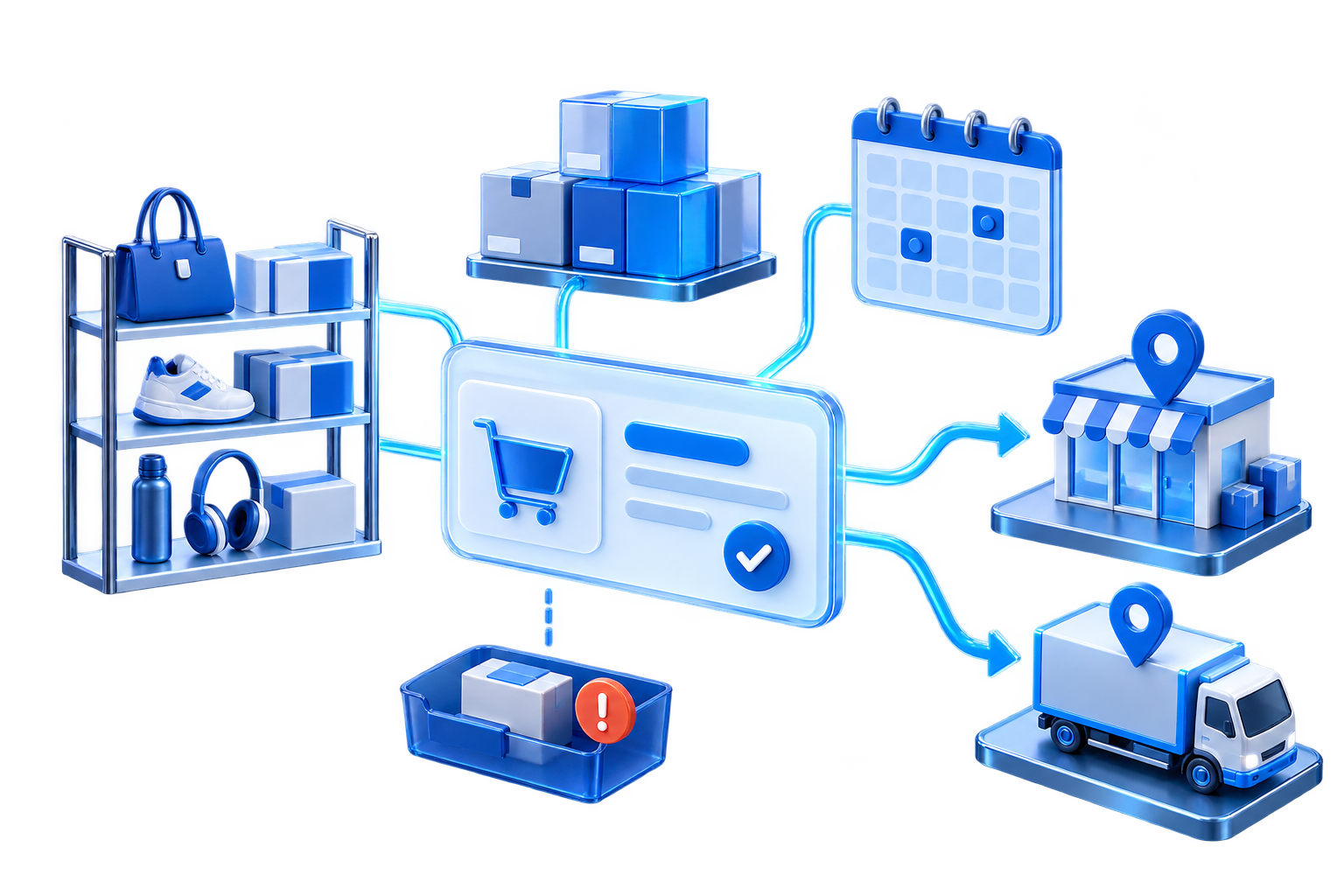
Shopify, WooCommerce and custom stores are assessed through supported APIs and events. The design names which system owns products, available quantities, prices, order status and customer details, including the required ERP, warehouse, accounting or spreadsheet connections. .NET services handle transformation, validation and the durable job record; deterministic rules control quantities, totals and permitted changes.
The delivered feature includes the agreed catalogue, order and fulfilment connections, a product or order assistant, and the operating view and staff notifications needed for preparation, pickup or dispatch. Its recoverable event handling is tested as part of the complete order journey, rather than treating a successful chat response as fulfilment.
A Complete Product Feature
Content, Search and Campaign Production
An AI content feature can turn product changes, service notes, staff expertise and approved references into structured briefs and draft articles. Each brief names its audience, channel, factual sources and required action. Drafts keep their references and review status so staff can check the substance before approving the next production step.
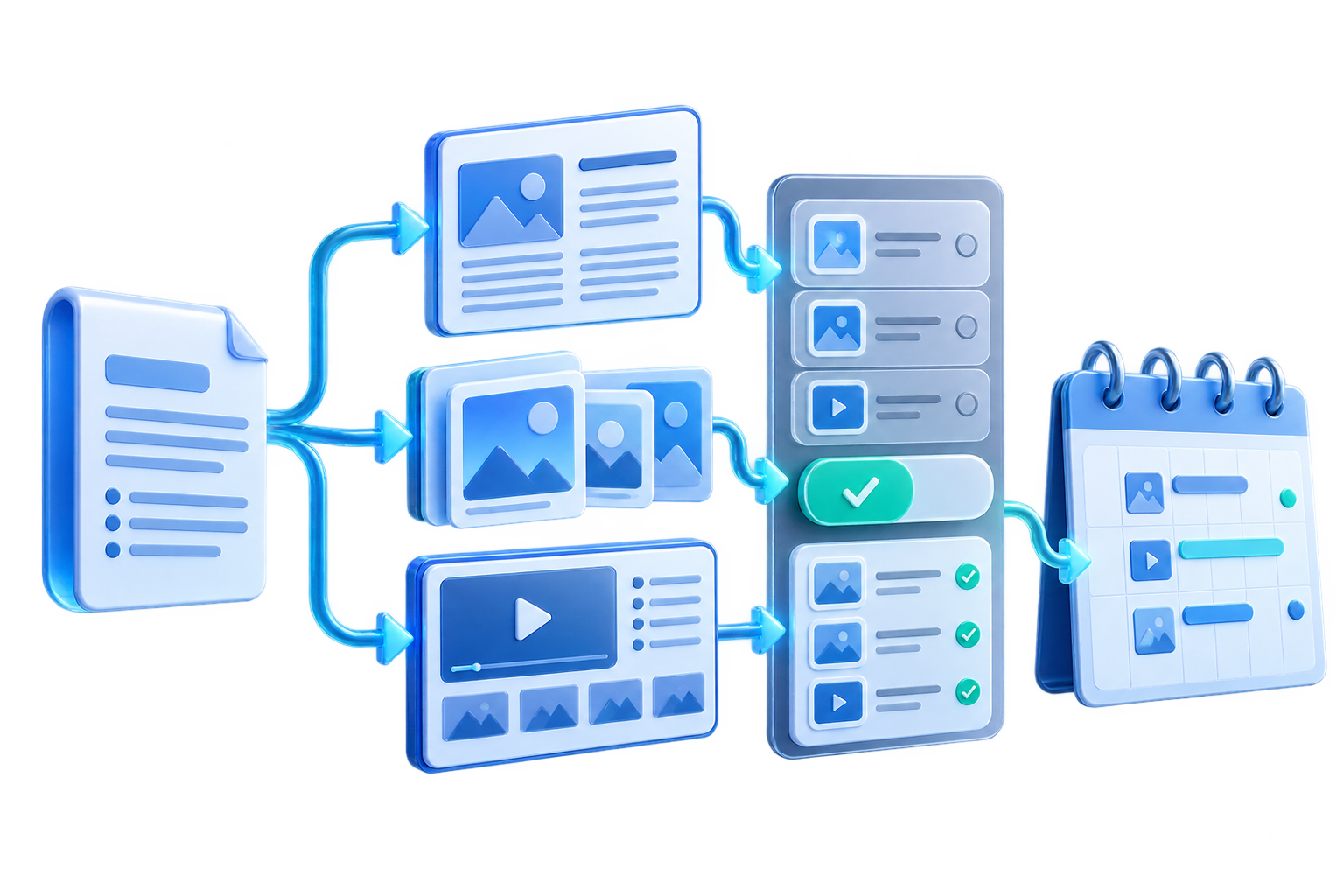
Search content can include titles, summaries, metadata and internal-link suggestions, with missing material and inconsistent terminology flagged for review. The editorial plan comes first; a generated keyword list or a volume of posts does not establish useful content. An approved article or campaign brief can then become email, newsletter and social drafts in the correct format and brand voice.
A publication calendar keeps assets, review state and destination together. Publication waits for your team’s approval at the agreed release point. Image and video generation can prepare campaign illustrations, product scenes, storyboards, captions and draft sequences from approved assets. Reusable banners, icon sets and brand-asset variations follow the approved style guide. Tourism, training and product marketing use the same production controls with different source material; acceptable generated imagery, likenesses and licensed assets are agreed during design.
Notion, a conventional CMS, the digital asset library and supported campaign tools can remain the working content model. Local Notion is our existing .NET Notion-integration and publication project; the additional briefing, generation, review and release stages are defined for your workflow. A .NET service owns content versions, approvals and provider connections while scheduled tasks and supported destinations can use a workflow platform.
The deliverable covers briefs, sources, drafts, assets, publication state and prompts/templates grounded in your audience, channels and approved brand examples. It includes the agreed text, image or video connections and CMS, newsletter or social-publishing integration. Review criteria include factual accuracy, tone, asset rights, broken links and successful publication. Usage, cost, failed jobs and pending approvals remain visible with a route to the original brief and source assets.
Release Against Representative Work
We test the feature with the same kinds of records, documents and permissions users will encounter. Acceptance covers output usefulness and the complete interaction, including a slow or unavailable provider. You receive source code, deployment configuration, integration documentation and the evaluation examples. Our role can end at an accepted release or continue into separately agreed QA and operational support as the product and model providers evolve.
For a customer assistant, acceptance includes the maintained answer set, product or account lookups, conversation rules, staff escalation and an operating view of unanswered questions, usage and handovers. We exercise outdated information, difficult requests and unavailable systems as well as successful answers. Bring real enquiries and the information staff consult to define the first useful scope.
For content production, one approved campaign supplies the source assets, review decisions and acceptance examples for the fixed-price build. The delivered process has a defined handover; additional channels, creative formats and continuing operation are agreed separately. Booking, CRM, document and order actions use the controlled workflow behind the interface.
Platforms & Tooling
.NET ASP.NET Core Blazor Microsoft.Extensions.AI Semantic Kernel OpenAI Claude ONNX Runtime
Discuss Your AI Project Back to AI Services