Buying a server, workstation or GPU system from a specification sheet often leaves you with a machine that is too small, too large or missing a part it needs. Sphere 10 specifies Dell, HPE and Lenovo servers, business workstations and NVIDIA GPU systems around the work they must run, then checks the delivered equipment against your real application before you rely on it.
What we do
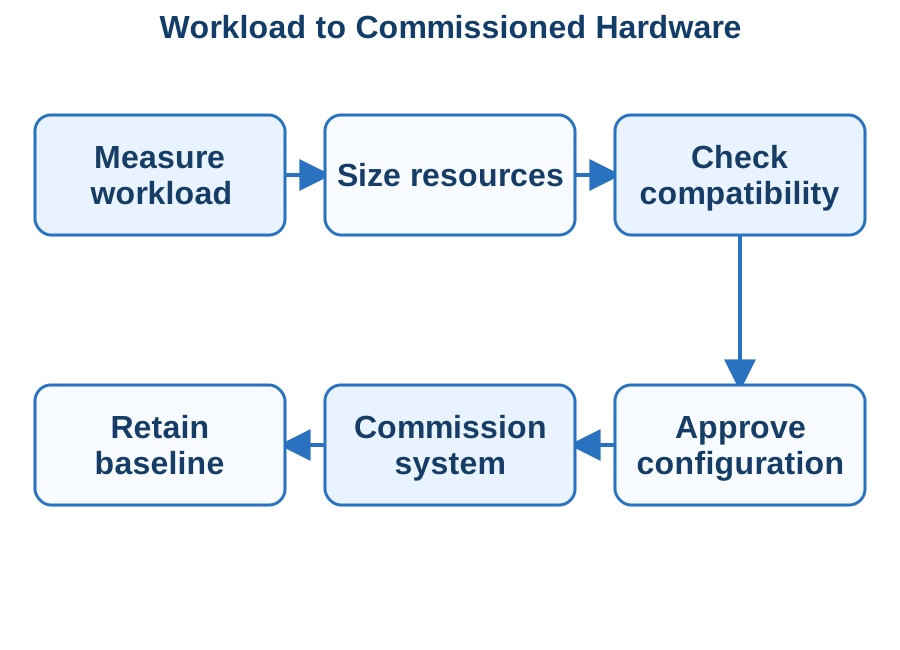
Measure the workload first. We run your actual transactions, reports, imports or model tasks and record the processor, memory, storage and network demand they create.
Size with room to grow. The capacity model separates what you need today, a planned growth allowance and optional expansion.
Check every part fits. We confirm that drives, network cards, graphics cards, memory, power and cooling are supported together in the chosen chassis, with your operating system and drivers.
Commission what arrives. We reconcile serial numbers and components against the approved order, set up remote management, then exercise the machine under sustained realistic load while watching temperatures, errors and application results.
Illustration of measured application demand becoming a verified equipment configuration.
What you receive
An approved bill of materials with the reasons for each choice, substitutions and dependencies.
A firmware and driver baseline with support references.
A commissioning report with the test inputs, results and any corrective actions.
A maintenance and replacement checklist, and a capacity baseline with triggers for the next review.
How we engage
Bring a representative database, report, import or model run. We agree the workload and the acceptance evidence with you before the equipment order is finalised. Acceptance rests on repeatable results under realistic conditions, not a single synthetic benchmark. Our System Expert engineering, which collects Windows hardware and health measurements, is the basis for this measuring discipline.
Technologies & Integration
Dell PowerEdge and iDRAC — Verify installed processors, DIMMs, controllers, NICs, PCIe/NVMe devices and firmware against the ordered configuration.
HPE ProLiant and iLO — Use generation-appropriate management and Redfish inventory for hardware health, remote operations and configuration evidence.
Lenovo ThinkSystem and XClarity — Record server status, storage, firmware and supported remote-management functions for the selected model.
NVIDIA CUDA compatibility — Qualify the GPU, driver, operating system and CUDA toolkit combination with the actual compute workload.
Repeatable Server Builds|Application-Ready Hosting|Operational Handover
A server that merely runs your application is hard to update, diagnose or rebuild. Sphere 10 deploys Windows Server and Linux as complete, documented environments for .NET applications, so your team knows where everything lives, who owns it and how to bring the service back after a fault.
What we do
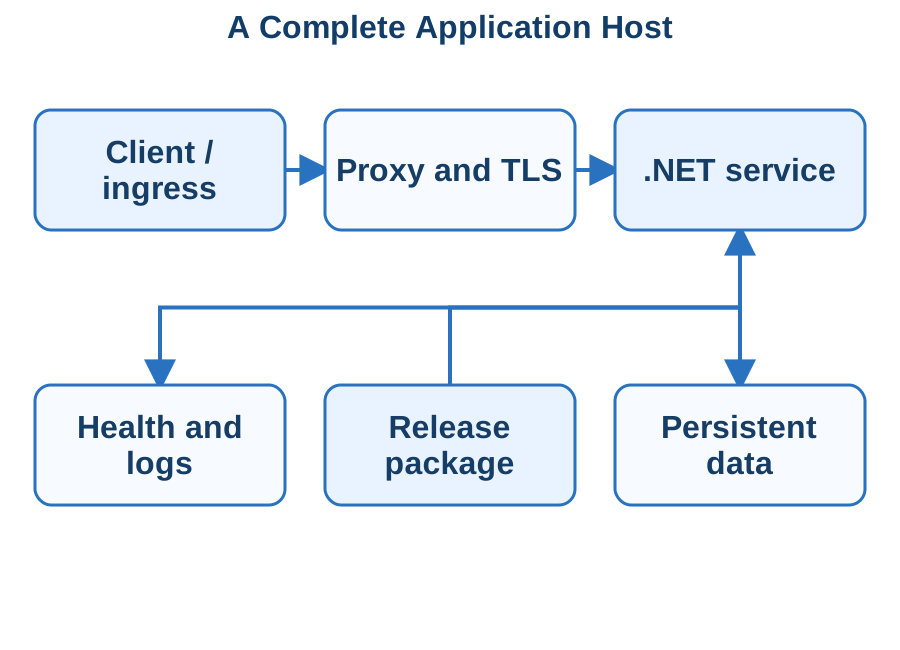
Map the application and its surroundings. We list the web sites, background services, databases, scheduled tasks and outside connections, with the accounts, permissions, firewall rules, DNS names and certificates each one needs.
Keep your data apart from the software. Databases, uploaded files and business records live in owned locations that survive a redeployment. Passwords and keys stay out of the release package.
Build a controlled host. On Windows we configure IIS or Windows Services. On Linux we configure the service supervisor with Nginx in front where required.
Test restart and failure. We exercise a cold boot, a service restart, an unavailable database and an expired credential, each with a defined recovery action.
Illustration of ingress, service supervision and persistent state with separate operational checks.
What you receive
A commissioned server with a versioned release location.
Build instructions, configuration records and an inventory of installed versions.
Logs, health checks and diagnostic checks that separate host, application and dependency faults.
Runbooks for verification, restart, rollback and restore, with responsibilities assigned for patching, certificate renewal and backups.
How we engage
Give us the application package, its external dependencies and a few representative user tasks. We use them to verify the installation after a reboot under the real service account. Monitoring, patching and incident response can continue afterwards under an agreed operating arrangement. Our Local Notion product runs across Windows, Linux and macOS, and that experience informs the procedures we hand over.
Running several systems on shared hardware saves equipment, but one busy virtual machine can slow the others, and a snapshot is not the same as a recoverable backup. Sphere 10 builds and migrates virtual infrastructure on Microsoft Hyper-V, VMware vSphere and Proxmox, sized around the applications that share it and tested by restoring a working system.
What we do
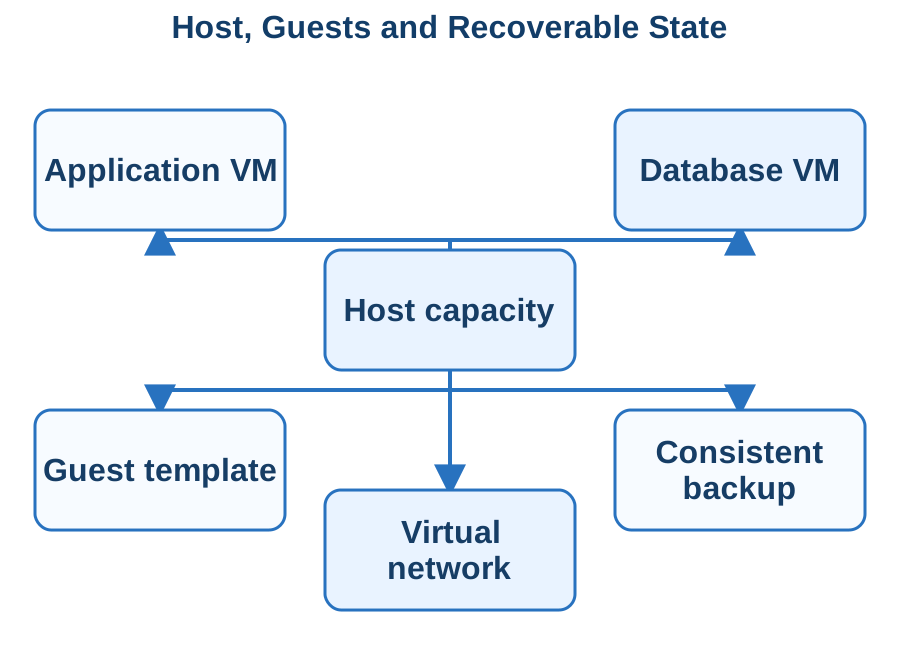
Allocate capacity for simultaneous demand. We measure processor, memory, storage and network use when several machines are busy together, including backup and maintenance windows, and record what is reserved and what can grow.
Keep databases and files consistent. Backups are coordinated with the applications that write the data, with recovery procedures suited to SQL Server and PostgreSQL.
Plan each migration. We record the endpoint and DNS changes, the moment the old machine stops accepting writes and the decision point for going back.
Make machines rebuildable. Templates capture the operating system, drivers and prerequisites. Machine identities and credentials are supplied separately, so a replacement never duplicates another server.
Illustration of shared host resources and independently managed application guests.
What you receive
An inventory of hosts and virtual machines with their configurations.
Templates and build records for the agreed machine roles.
A capacity allocation record and baseline measurements.
Host, virtual machine and application recovery procedures with named owners.
How we engage
Tell us which business service must return first after a host or storage failure. That order decides how machines are grouped, how backups are taken and what the commissioning exercise covers. Acceptance restarts hosts and virtual machines, loads several at once and restores a representative system, then completes its application tasks. Where a migration is in scope, we rehearse it and measure its effect on the application.
Technologies & Integration
Microsoft Hyper-V — Configure virtual processors, memory, switches, guest storage and host/guest recovery checks for Windows and Linux workloads.
VMware vSphere resource management — Review ESXi guest reservations and limits, contention and the capacity needed by the application workload.
Proxmox VE — Build QEMU/KVM guests, storage, networking, templates and an explicit backup/restore procedure.
KVM and libvirt domain configuration — Define guest CPU topology, memory, disk and virtual-network devices in a reproducible host configuration.
Containers make an application portable and its releases repeatable, but they add operating work that someone has to own. Sphere 10 packages .NET applications into Docker images and runs them with Docker Compose or Kubernetes, choosing the smallest arrangement that meets your availability needs.
What we do
Choose the operating model first. A single Compose host suits a defined group of services. Kubernetes adds scheduling and rollout control, along with responsibility for ingress, storage and cluster upgrades. We select from your availability and ownership requirements.
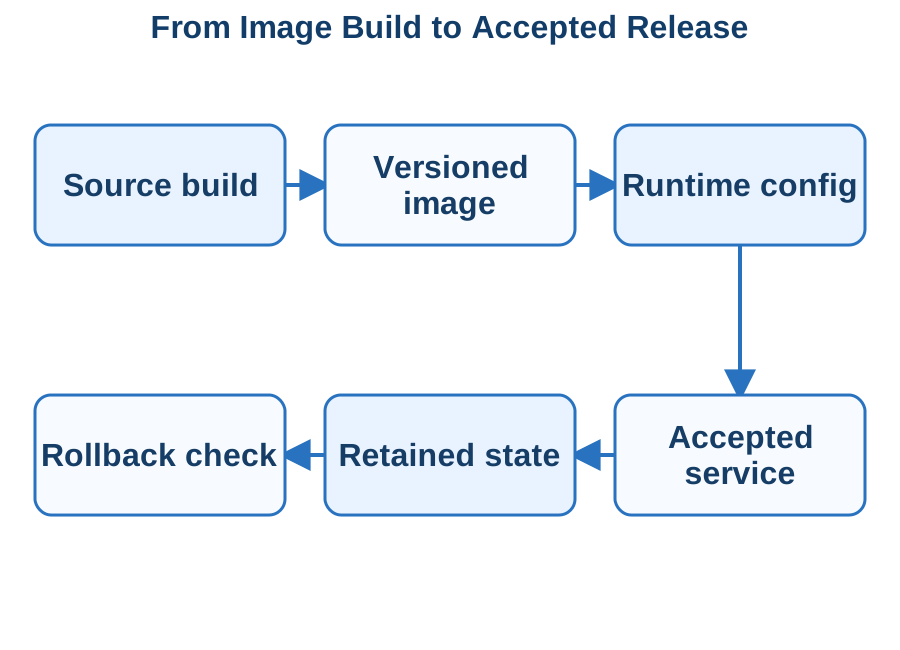
Separate the image from its settings and data. Images are versioned and unchanging. Configuration and secrets are supplied from outside, and business data lives in explicit storage that survives a container being replaced.
Define a reproducible release. Each release ties an exact image to its configuration, with health checks, resource limits and repeatable deployment commands.
Protect work during updates. Database changes are staged so the old and new versions can run side by side, and stop requests give active work time to finish.
Illustration of versioned images separated from environment configuration and retained data.
What you receive
Versioned images and deployment configuration for Compose or Kubernetes.
Release records linking source, image and configuration for each environment.
Deployment commands with preflight and status checks.
Restart, rollback and incident procedures for the chosen model.
How we engage
We begin with your service's actual processes and data, because a web application, a background worker and a database have different startup, shutdown and storage needs. Design records which failures the installation must tolerate and who will operate it. Acceptance covers a fresh deployment, a restart, a failed dependency and the replacement of an image while real requests or jobs are active. We then confirm that the records survived.
Technologies & Integration
Docker Compose — Deliver a versioned multi-container service, network and volume configuration with host-level start, stop and recovery instructions.
Kubernetes Deployments — Define replica rollout and service replacement with readiness, resource and storage requirements recorded separately.
Kubernetes Secrets — Configure secret access, service-account permissions and the application consumption boundary; document the cluster storage and access controls.
Helm — Package reusable Kubernetes resources with reviewed environment values and an identifiable release generation.
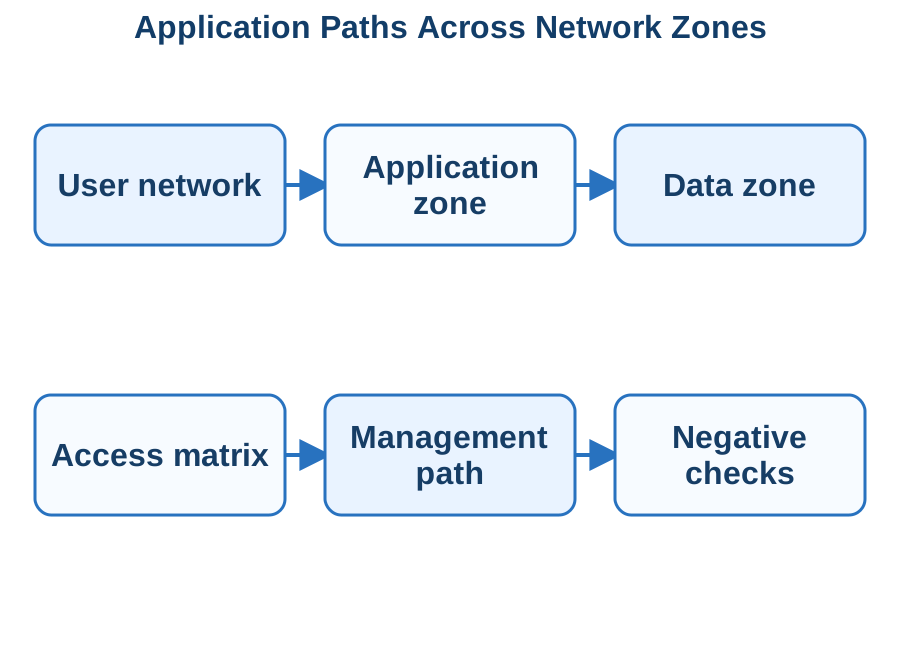
A flat network lets every device reach every other, including your databases and administration consoles. Sphere 10 designs segmented networks around the paths your applications actually use, so users, applications, data and management each sit behind their own boundary and every permitted connection has a stated purpose.
What we do
Map the real traffic. We trace a named task, such as a login, an upload or a report, to find every connection it depends on, including DNS, time, identity and certificate services.
Design access by purpose. Administration, public access, staff access and communication between services receive separate rules. Network boundaries work alongside the permissions inside your applications and do not replace them.
Apply reviewed changes in order. We configure VLANs, routing and firewall rules on equipment such as Cisco switches and FortiGate or pfSense firewalls, with configuration backups.
Add controlled entry where needed. Device authentication at the network port and WireGuard tunnels for sites or administrators are included where the access model calls for them.
Illustration of user, application, data and management boundaries.
What you receive
An address plan and a network topology.
An access matrix listing each permitted path with its purpose and owner.
Configuration backups with a tested way to restore them.
The record of tested allowed and denied connections.
How we engage
Start with a traffic example. One named user task and its dependencies give the design a purpose we can test before any address or firewall rule changes. During the change we keep a known management path open and prove the administrative recovery route before the window closes. Acceptance runs complete application workflows from the real user and service networks, and also attempts the connections that should be refused.
Technologies & Integration
IEEE 802.1Q VLANs — Design bridge/VLAN boundaries, access and trunk membership, addressing and the routed enforcement point.
IEEE 802.1X — Define port-based network access with the required authentication infrastructure and an operational recovery path.
FortiGate interfaces — Configure physical and VLAN interfaces with the address, route and security-policy ownership required by each zone.
WireGuard — Define peer keys, tunnel routes, access rules and revocation procedures for the agreed site or administrative connection.
Recovery You Can Verify|Defined Recovery Targets|Consistent Data Capture
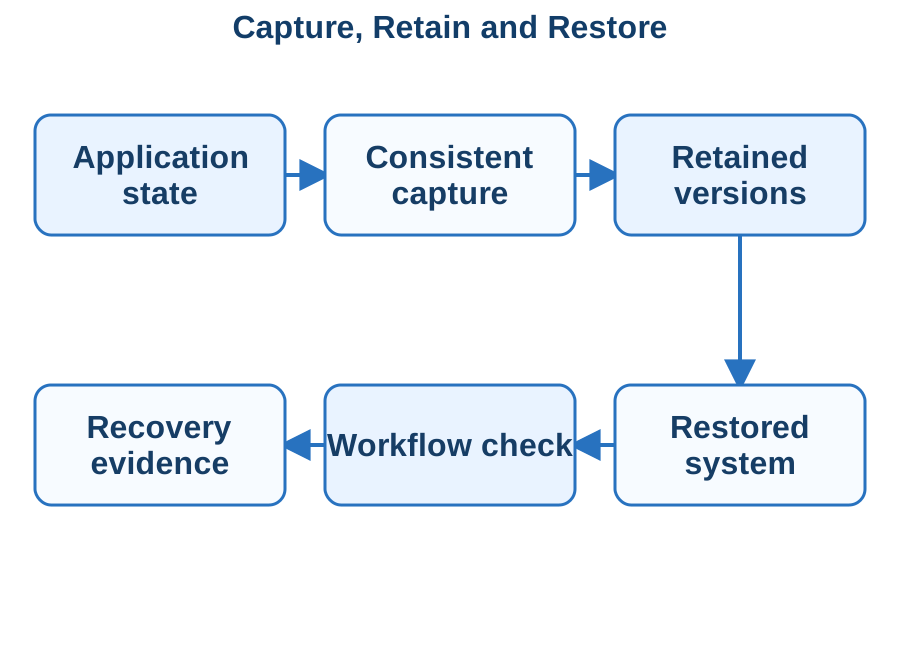
A backup job that reports success does not show that your business can be restored. Sphere 10 delivers backup and recovery for virtual machines, .NET applications, databases and business files, and demonstrates the route from stored data back to a working application.
What we do
Define what must come back. We name the databases, file stores, configuration, encryption keys and application version needed to restore each business function, and agree with you how much data loss and downtime is acceptable.
Capture data consistently. SQL Server, PostgreSQL and SQLite each receive a backup method suited to how they write data, and related files are recorded with the database copy.
Use fitting tools. We work with Veeam Backup & Replication, restic and the databases' own backup tooling, with off-site storage and retention that allows for operator mistakes.
Make failures visible. Missed jobs, empty or partial results, full repositories and expired access are reported as problems with a named owner and repair steps.
Illustration of a backup being verified through an independent restored application.
What you receive
Configured backup jobs, repositories and retention.
A recovery inventory with the order in which services must return.
Monitoring and alert handling for the backup process itself.
Restore runbooks and a schedule for repeating recovery exercises.
How we engage
Tell us which records and user functions must return and what loss window you can accept. Acceptance restores selected data into a separate environment using only the documented recovery package, then checks the records, the permissions and a representative business workflow. We measure the full recovery time and make sure the restored copy cannot send live notifications or repeat scheduled work. Our Local Notion product, which downloads Notion content to local storage with history, is a working reference for this approach.
Evidence-Led Decisions|Observed System Evidence|Prioritised Remediation
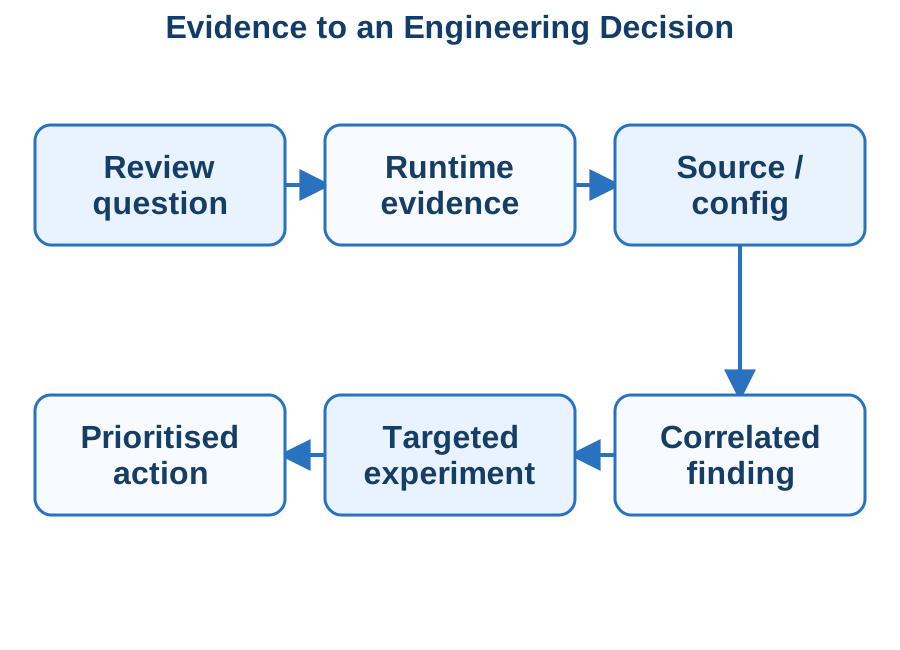
When you inherit a system, face a slow production workload or plan a migration, you need evidence before you spend. Sphere 10 audits existing .NET applications together with their Windows, Linux, database and network dependencies, and turns the findings into a prioritised correction plan.
What we do
Agree the question and the boundary. We settle which business operations, servers, source repositories and data are in scope, and what evidence we are permitted to collect.
Match what is deployed to its source. We confirm the running version and configuration against the engineering records before interpreting a reported defect.
Trace real operations. A representative slow task is followed from the screen through the application and its database queries.
Review security and operating controls. Where these are in scope, we use the relevant CIS Benchmarks and NIST Cybersecurity Framework outcomes.
Rank by consequence. Work that blocks a safe release, a migration or scaling is separated from later maintainability improvements.
Illustration of an audit correlating observations before prioritising implementation work.
What you receive
Prioritised findings, each with its evidence, consequence and recommended correction.
Remediation options with prerequisites and a closure condition you can retest after a fix.
Reproducible checks and non-secret configuration references.
A usable baseline for the team that carries out the work.
How we engage
We define the systems, access, evidence and decision criteria at the start. We walk through the findings with the people responsible for the system and distinguish observed defects, credible risks and questions that need a targeted experiment. Acceptance is the agreed evidence package and decision support. It is not a promise that every possible defect has been found. Our Sphere10 Framework and System Expert work give us direct experience of the application and host concerns these reviews cover.
Technologies & Integration
.NET diagnostic tools — Use runtime counters, traces and profiling evidence to isolate CPU, allocation, concurrency and dependency costs.
dotnet-counters — Capture a repeatable baseline of runtime and application meters while reproducing the reported workload.
Sysinternals Process Explorer — Inspect Windows processes, identities, loaded modules and resource use alongside application evidence.
Wireshark — Capture only the authorised traffic needed to explain routing, connection, protocol and timing behaviour.